How to Choose the Right Borehole Filters for Your Needs?
Choosing the right Borehole Filters is crucial for ensuring clean water access. Dr. Emily Sinclair, a leading expert in water resource management, emphasizes, "The effectiveness of a borehole largely depends on the quality of its filters." This statement reflects the need for careful consideration when selecting filters.
Borehole Filters play a significant role in removing impurities from groundwater. It is essential to match filter specifications with water quality and intended usage. For example, the type of sediment in the water will influence the choice of filtration media. A thorough analysis of water quality can greatly inform your decision.
Many overlook the importance of maintenance in their purchasing decisions. Without regular checks, even the best filters can fail. A reliable Borehole Filter should not only filter effectively but also be easy to maintain. Investing in quality filters often pays off in the long run. Ultimately, informed choices lead to safer, cleaner water for communities.

Understanding Borehole Filters and Their Purpose
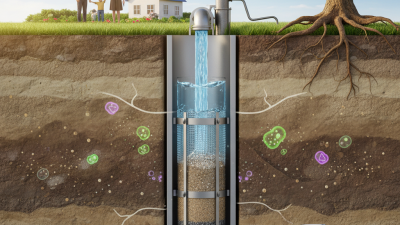
Borehole filters play a crucial role in groundwater extraction. They protect pumps from debris and contaminants. Proper filtration enhances water quality and prolongs the lifespan of pumping systems. According to the U.S. Geological Survey, nearly 45% of the U.S. population relies on groundwater. This makes effective filtration essential.
Understanding the purpose of borehole filters helps in choosing the right type. Sand and gravel formations can clog filters quickly. A study from the National Ground Water Association highlights that improper filtration can lead to a 30% reduction in flow rate. Fine particles accumulate over time. It’s essential to select filters based on the specific geological conditions of each site.
There are several types of filters, including wire-wrapped and slotted options. Wire-wrapped filters offer strength in turbulent water, while slotted filters are better for sediment-heavy areas. However, too many slots can allow uncontaminated elements to escape. Regular monitoring is necessary to ensure filter efficiency. The choice of material and thickness directly impacts the performance and maintenance of the filter system. Consideration of these factors is vital for sustainable water access.
How to Choose the Right Borehole Filters for Your Needs?
| Filter Type |
Mesh Size (Microns) |
Material |
Common Use |
Lifespan (Years) |
| Stainless Steel Filter |
50 |
Stainless Steel |
High Flow Applications |
10 |
| Plastic Filter |
100 |
Polypropylene |
General Use |
5 |
| Copper Filter |
25 |
Copper |
Heavy Metal Removal |
7 |
| Fiberglass Filter |
75 |
Fiberglass |
Sand and Silt Removal |
6 |
Types of Borehole Filters: A Comprehensive Overview
Borehole filters play a crucial role in water quality management. Their primary function is to prevent sediment and contaminants from entering the water supply. Choosing the right type is essential for optimal performance. There are several types of borehole filters available, including sand filters, gravel filters, and mesh screens.
Sand filters are commonly used in residential settings. They can efficiently trap particles while allowing water to flow through. According to a report by the Water Quality Association, nearly 55% of homeowners use sand filters for groundwater treatment. Gravel filters, on the other hand, provide larger voids and better drainage but may allow finer particles to pass through. This can be an issue in areas with high sediment levels.
Mesh screens are often employed in industrial applications. They prevent larger debris from entering pumps and pipes. Industry standards suggest using mesh sizes ranging from 30 to 400 microns, depending on the application. Each filter type has unique advantages and challenges, making it essential to evaluate local water conditions carefully. Continuous monitoring and maintenance are crucial to ensure long-term effectiveness. Understanding these fundamentals can enhance decision-making when selecting borehole filters.
Factors to Consider When Selecting Borehole Filters
When selecting borehole filters, several key factors should be considered. The filter's material plays a critical role. Common materials include stainless steel and plastic. Each has its advantages and disadvantages. Stainless steel is durable but can be more prone to corrosion. Plastic filters are lightweight and cost-effective but may not last as long.
Another aspect to consider is the mesh size of the filter. A finer mesh will catch smaller particles, which is important in areas with sediment. However, a fine mesh can also become clogged more quickly. This might require more frequent maintenance, leading to increased costs in the long run. Balancing filtration efficiency with maintenance needs is crucial.
Lastly, the flow rate is essential. Each application has different requirements for how much water needs to be filtered within a specific time. Underestimating this can lead to reduced water supply and insufficient pressure. It is also wise to reflect on the installation process. Some filters are easier to install than others, impacting labor costs. Choosing the right borehole filter involves thoughtful consideration of these factors to ensure long-term efficiency.
Factors to Consider When Selecting Borehole Filters
Evaluating Filter Efficiency and Maintenance Requirements
When selecting borehole filters, understanding efficiency is crucial. Filter efficiency refers to how effectively a filter removes unwanted particles from water. A highly efficient filter is essential for ensuring clean water for consumption or irrigation. Many factors influence this efficiency, including the filter's material, pore size, and design. An improper selection can lead to less filtered output, risking water quality.
Maintenance requirements should not be overlooked. Regular maintenance ensures optimal performance and longevity of the filter. Some filters may require frequent cleaning or replacement, resulting in higher operational costs. On the other hand, low-maintenance filters may save time but could sacrifice filter efficiency. Inspecting the filter regularly helps identify potential issues early. It’s important to balance efficiency and maintenance; both should fit your specific usage needs. A common mistake is choosing a filter solely based on efficiency ratings without considering maintenance.
Best Practices for Installing and Operating Borehole Filters
When installing and operating borehole filters, precision is essential. Quality filters enhance water quality and extend pump life. Studies indicate that well-maintained borehole systems can reduce operational costs by as much as 20%. Selecting the right filter involves understanding mesh size, filter material, and flow rate. These factors directly influence efficiency.
Tips: Always conduct water quality tests before installation. This insight helps in choosing a filter that meets specific water conditions. For example, high sediment levels necessitate coarser filters.
Proper installation is crucial. Ensure seals are tight to prevent contaminants from entering. A report by the International Groundwater Resources Assessment Centre emphasizes that improperly installed filters can significantly decrease water yield. Regular maintenance checks, including filter cleaning and replacements, can enhance longevity and performance.
Tips: Monitor water clarity and flow rates regularly. Any sudden changes may signal a problem with filtration. Adapting your strategy based on observable conditions can lead to better outcomes.